Nostril · $22

Nostril Piercing

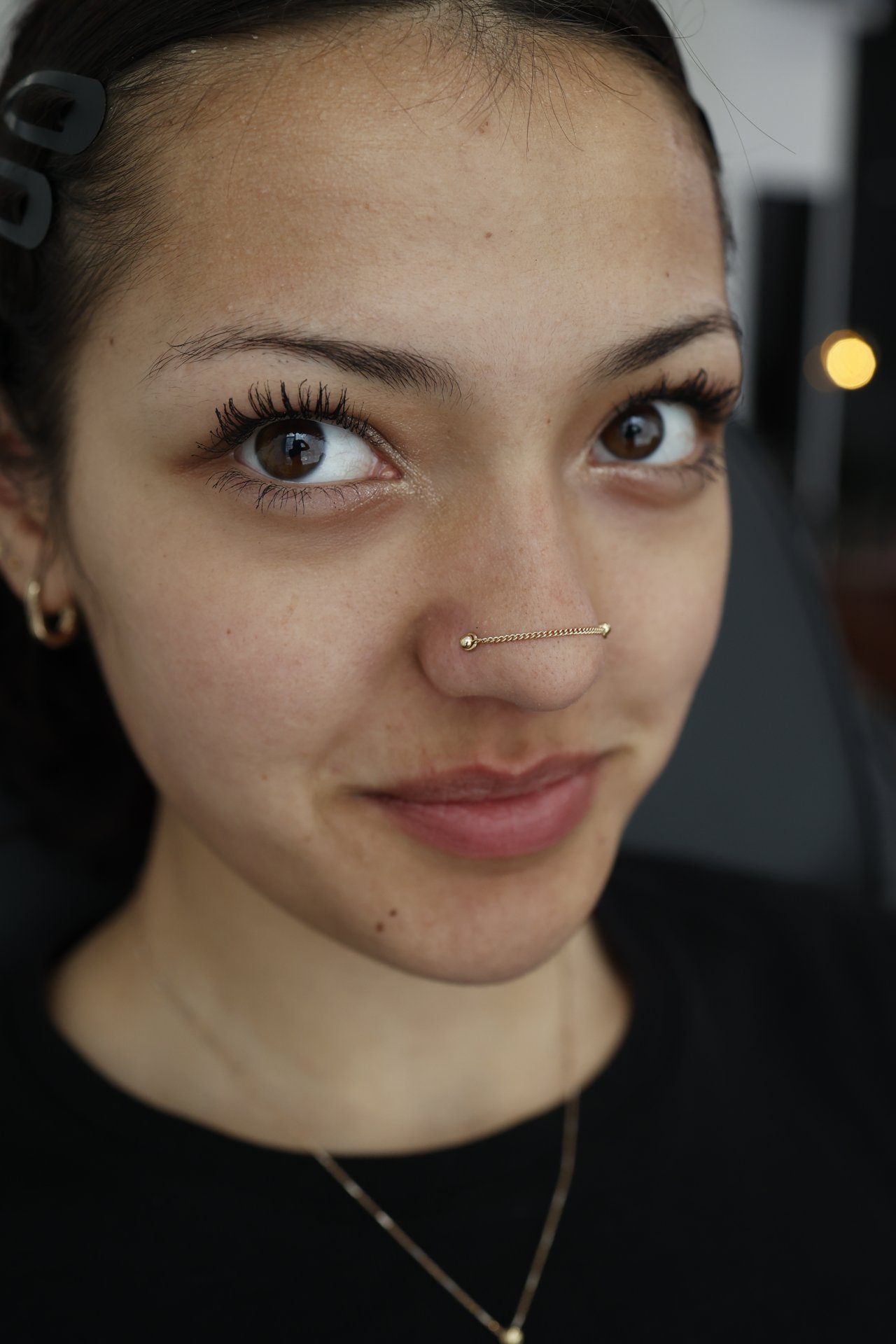
The single nostril piercing is the most requested piercing at our Midtown Manhattan studio — a quiet, confident detail that suits almost every face.

Service price; jewelry sold separately

Nostril Piercing

What to expect

A calm, methodical appointment.

  • 01

    Performed with a sterile, single-use needle by an APP-standard certified piercer.

  • 02

    Placement is marked in front of a mirror and approved by you before any piercing is performed.

  • 03

    Initial jewelry is implant-grade ASTM F-136 titanium or nickel-free 14k / 18k solid gold from a 400+ piece selection.

  • 04

    Typical healing window is 4–6 months. Most clients describe sensation as a quick 2–3 second pinch.

The most requested piercing in NYC, done right

The single nostril piercing is by far the most popular nose piercing we perform — and the one most often done badly elsewhere in the city. Many first-time clients arrive at our 37th Street studio with a story about a previous gun-shot piercing that bumped, migrated, or never quite settled. The placement was wrong, the jewelry was too short, or the technique introduced trauma the tissue could not recover from cleanly. We rebuild that experience from the ground up.

A nostril piercing should look effortless. The stone or stud should sit naturally in the soft crease where the nostril meets the cheek, level with the curve of the wing, and proportionate to the rest of the face. That placement is not standardized — it is anatomical. We mark each side individually, in front of a mirror, and only proceed once you have approved exactly where the jewelry will sit.

The piercing itself takes seconds. The conversation about placement, jewelry, and aftercare usually takes longer than the procedure. That is by design. A nostril piercing you wear for years deserves more than a thirty-second decision.

How the appointment runs

You will sit in a private, hard-surface treatment room. Your piercer washes and gloves up in front of you. The needle and jewelry are unsealed from their sterile packaging while you watch. The skin is cleaned with a surgical-grade antiseptic. Placement is marked with a sterile single-use marker and checked in a hand mirror until you are confident.

When you are ready, your piercer braces the inside of the nostril with a sterile receiving tube and passes the needle through in a single, controlled motion. The sensation is sharp for about two seconds — most clients rate it around a three out of ten. Your eyes may water briefly. That is a reflex, not pain.

The jewelry — your selected titanium or solid gold stud — is threaded into place immediately. Your piercer checks the seat, photographs the result for your records if you would like, and walks you through the aftercare routine before you leave.

Why APP-standard technique matters

The Association of Professional Piercers (APP) is the body-piercing industry's leading safety organization. Their published procedure manual sets the standard for how piercings should be performed in the United States: sterile single-use needles, autoclaved tools, implant-grade jewelry, gloved technique, and a clean, hard-surface treatment room. Nose Piercing NYC operates to that standard on every appointment, every day.

What that looks like in practice: a fresh needle is opened in front of you and discarded in a sharps container immediately after the piercing. The forceps and receiving tubes that support the tissue are individually packaged and steam-sterilized in an autoclave that is spore-tested regularly. Jewelry that touches a fresh wound is implant-grade ASTM F-136 titanium or nickel-free 14k or 18k solid gold — not steel of unknown grade, not gold-plated brass, not the mystery alloys found in mall-kiosk studs.

We work this way because piercings are minor surgical procedures. A nose piercing creates an open wound through skin and, in some placements, cartilage. The risk of localized infection, allergic dermatitis, hypertrophic scarring, and migration drops sharply when the equipment is sterile and the jewelry is biocompatible. Cutting corners on any of those inputs is the single biggest reason piercings fail.

Jewelry we use for fresh piercings

Initial jewelry is the single most important variable in how well a piercing heals. We stock more than 400 pieces specifically curated for nose and septum piercings, and every option that touches a fresh piercing meets the APP's material standards.

Implant-grade ASTM F-136 titanium is our default for first-time clients. It is the same alloy used in surgical implants — proven biocompatible, hypoallergenic, light, and available in a range of anodized colors. Titanium labret studs and circular barbells are gentle enough for the most reactive skin and durable enough to last decades.

Nickel-free 14k and 18k solid gold is the other option we install on fresh piercings. We source from established body-jewelry manufacturers whose alloys are tested nickel-free at the casting stage — not gold-plated, not gold-filled, not vermeil. For clients ready for a statement piece after healing, our BVLA selection of solid gold ends is one of the most extensive in Midtown.

Outside jewelry is welcome with one condition: we inspect it first. If a piece meets APP standards for material, finish, and threading, we are happy to install it. If it does not, we will tell you honestly and offer alternatives. Installing unknown jewelry into a fresh wound is the fastest way to turn a clean piercing into a problem.

How piercings actually heal

Healing is a layered process. The visible scab and tenderness fade in two to four weeks, but the channel itself — the fistula — continues to build durable tissue for months. Until that fistula is fully formed and lined with epithelial cells, the piercing is still a wound, even if it looks fine on the outside.

For nostril piercings, the practical healing window is four to six months. High nostril piercings, set in thicker cartilage, take six to nine months. Septum piercings close their fistula in around six to eight weeks but take four to six months to settle enough for comfortable jewelry changes. Pushing past these timelines — swapping jewelry early, sleeping on the piercing, swimming in public water — is the most common cause of preventable problems.

Two things drive a smooth heal: sterile saline twice a day, and leaving the jewelry alone. That is the entire routine. The old advice to twist or rotate jewelry has been formally retired by every modern piercing authority, including the APP. Movement disrupts the tender tissue that is trying to form around the post, and most bumps and irritations we see in returning clients trace back to over-handling.

Nostril piercing aftercare in practice

Twice a day, spray sterile saline onto both sides of the piercing. Let it air-dry or pat gently with clean, non-shedding gauze — never a towel, which carries laundry detergent and lint. That is the morning and evening routine for the first eight weeks.

Avoid pulling shirts and sweaters over your face; unbutton or step into them instead. Switch to a fresh pillowcase every two or three days, and try not to sleep with direct pressure on the pierced side. If you wear glasses, make sure the frame does not catch the jewelry.

Skip pools, hot tubs, lakes, and the ocean for the first six to eight weeks. Avoid makeup, sunscreen, and skincare directly over the piercing — apply around it and blot away any product that strays. If you are prone to seasonal allergies, treat them aggressively; nose-blowing and sneezing both stress a healing nostril piercing.

Plan a downsize appointment at eight to ten weeks. The post we install on day one is intentionally a little longer than your final post, to accommodate swelling. Once swelling has resolved, swapping in a shorter post makes the piercing more comfortable, less likely to snag, and less likely to develop irritation bumps from a piece sitting too proud against the skin.

Choosing nostril jewelry that lasts

For a first nostril, we typically install an internally threaded titanium labret stud with a small flat-back gem or polished disc. The flat back rests comfortably inside the nostril, the post does not migrate, and there are no nickel-bearing alloys to react with.

After healing, the options expand dramatically. You can move to solid 14k or 18k gold; switch to a fixed-bead nose ring if you prefer a hoop; layer in a high nostril; or upgrade to a BVLA solid gold cluster, marquise, or bezel-set diamond. Many clients eventually wear a different piece for daytime and a statement piece for evenings.

What we do not install — ever — are sterling silver, nickel-bearing white gold, plated brass, or unknown costume metals. Silver tarnishes inside a wound; plated alloys flake; and nickel sensitization is one of the most common causes of long-term skin reactions in the United States.

Aftercare

Less is more.

We give every client a simple, APP-aligned aftercare routine. No twisting jewelry, no harsh cleansers. Read the full guide.

  • Saline spray two to three times daily for the first eight weeks.
  • Avoid changing jewelry, swimming pools, hot tubs, and makeup over the piercing while it settles.
  • Sleep with a clean pillowcase and avoid pressure on the piercing.

Nostril Questions

Questions, answered honestly.

Does a nostril piercing hurt?
The piercing itself takes about two seconds and most clients rate the sensation around 3 out of 10. Your eyes may water briefly — that is a reflex, not pain. Nostrils are quick and forgiving compared to most other facial piercings.
How long until I can change the jewelry?
Plan on four to six months before any jewelry change. We do recommend a quick downsize appointment at eight to ten weeks to swap the longer post installed on day one for a shorter, more comfortable piece — but that is still your original style.
Will a nostril piercing leave a scar if I take it out?
If removed early in healing, the channel usually closes with a small mark. After full healing — six to twelve months — removal can leave a tiny depression that fades over time. Quality of the original piercing and jewelry choice both affect how cleanly a removed piercing fades.
Can I get pierced if I wear glasses?
Yes. We position the jewelry so that it sits clear of the typical glasses pad area. Mention your frames at the appointment so the piercer can confirm the placement works for your everyday wear.
Should I take ibuprofen before the appointment?
No. NSAIDs thin the blood and can increase bleeding at the appointment. Eat a normal meal an hour or so beforehand, hydrate, and skip alcohol the night before. That is all the preparation you need.
Is a stud or a ring better for a first nostril piercing?
A flat-back stud. Rings can be worn after the piercing has fully healed, but during the first months a stud sits cleanly inside the wound channel and does not rotate, snag on bedding, or pull on the tissue the way a hoop can.

Book a nostril piercing

Book online in under a minute.

Walk-ins welcome by availability. Booking online guarantees your time and piercer. Open every day · 11:30 AM – 7:30 PM · 34 West 37th Street, 2nd Floor.