High Nostril · $40

High Nostril Piercing

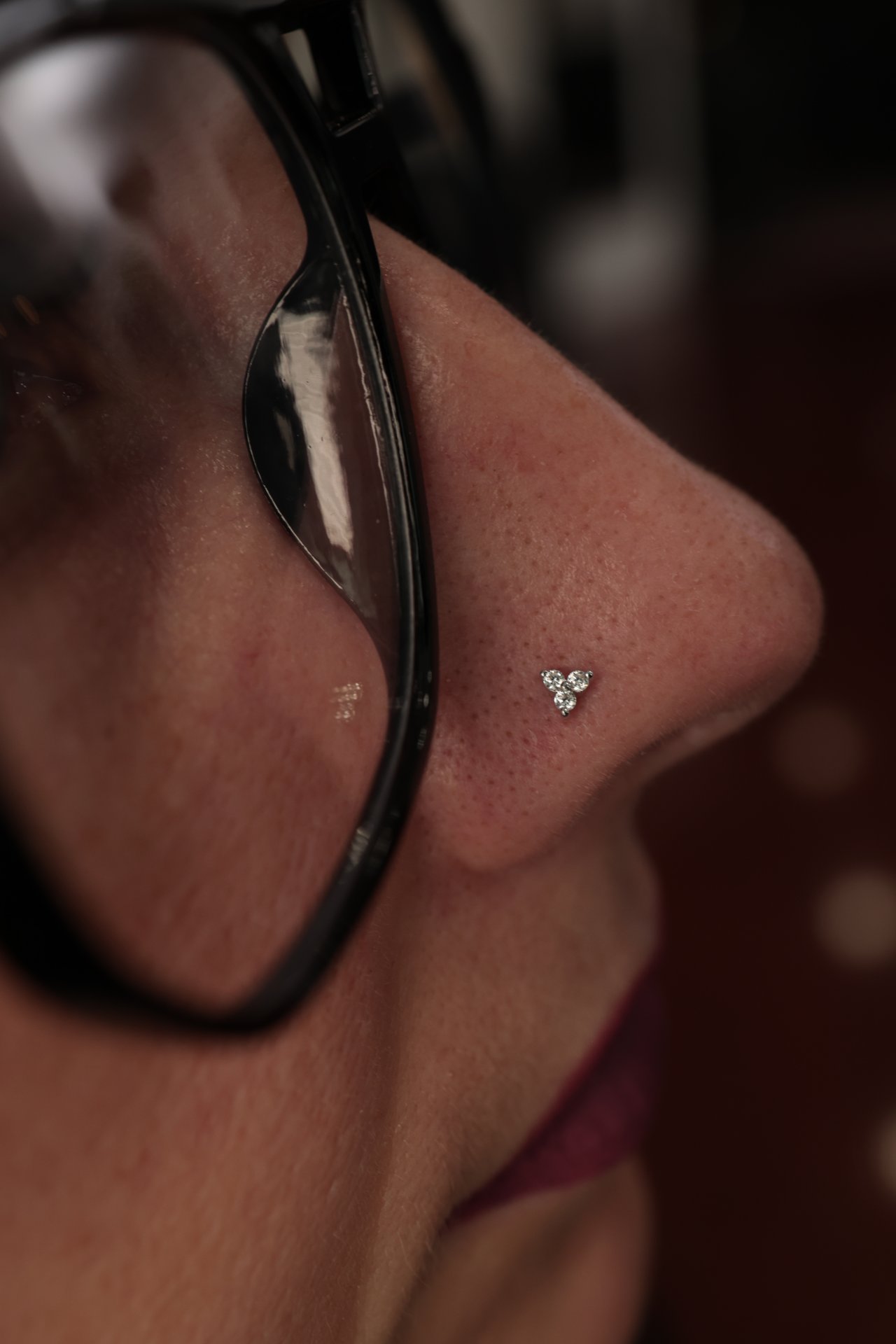
Set higher on the side of the nose, the high nostril is an editorial placement that catches light beautifully and pairs naturally with a standard nostril stud.

Service price; jewelry sold separately

High Nostril Piercing

What to expect

A calm, methodical appointment.

  • 01

    Sterile, single-use needle technique by certified piercers.

  • 02

    Anatomy is assessed first — not every nose suits this placement; we will tell you honestly.

  • 03

    Initial jewelry must sit flush. Implant-grade titanium labret studs are standard.

  • 04

    Typical healing window is 6–9 months. Sensation is slightly sharper than a standard nostril.

An editorial placement, with real anatomy requirements

The high nostril sits above the natural fold of the nostril, on the cartilage panel halfway between the tip and the bridge of the nose. The visual effect is striking: a small stone or stud, set high on the side of the face, that catches light and reads as architectural rather than decorative.

Because the placement passes through thicker cartilage than a standard nostril, it is more demanding both anatomically and procedurally. Not every nose carries a high nostril well. If the cartilage is too thin, too thick, or the angle of the wall makes flush jewelry impossible, we will tell you at the consultation. We would rather decline a piercing than perform one we cannot stand behind.

When the anatomy is right, the result is one of the most photogenic placements in the studio — single-side, double-stacked with a standard nostril, or mirrored across both sides for a balanced look.

What the appointment looks like

We start with an anatomy check. Your piercer assesses both sides, marks proposed placement, and checks the angle and depth with you in a mirror. If both sides are viable, you can pierce one or both — but we recommend piercing one at a time for the first high nostril, so you can confirm you love the placement before committing to the second.

The piercing itself uses the same sterile single-use needle technique as a standard nostril, but the cartilage requires a slightly longer pass and slightly more pressure. Sensation is a sharper two to three seconds. Eyes may water more than with a standard nostril. The procedure ends as quickly as it begins, and the titanium labret stud is installed immediately.

Why APP-standard technique matters

The Association of Professional Piercers (APP) is the body-piercing industry's leading safety organization. Their published procedure manual sets the standard for how piercings should be performed in the United States: sterile single-use needles, autoclaved tools, implant-grade jewelry, gloved technique, and a clean, hard-surface treatment room. Nose Piercing NYC operates to that standard on every appointment, every day.

What that looks like in practice: a fresh needle is opened in front of you and discarded in a sharps container immediately after the piercing. The forceps and receiving tubes that support the tissue are individually packaged and steam-sterilized in an autoclave that is spore-tested regularly. Jewelry that touches a fresh wound is implant-grade ASTM F-136 titanium or nickel-free 14k or 18k solid gold — not steel of unknown grade, not gold-plated brass, not the mystery alloys found in mall-kiosk studs.

We work this way because piercings are minor surgical procedures. A nose piercing creates an open wound through skin and, in some placements, cartilage. The risk of localized infection, allergic dermatitis, hypertrophic scarring, and migration drops sharply when the equipment is sterile and the jewelry is biocompatible. Cutting corners on any of those inputs is the single biggest reason piercings fail.

Jewelry we use for fresh piercings

Initial jewelry is the single most important variable in how well a piercing heals. We stock more than 400 pieces specifically curated for nose and septum piercings, and every option that touches a fresh piercing meets the APP's material standards.

Implant-grade ASTM F-136 titanium is our default for first-time clients. It is the same alloy used in surgical implants — proven biocompatible, hypoallergenic, light, and available in a range of anodized colors. Titanium labret studs and circular barbells are gentle enough for the most reactive skin and durable enough to last decades.

Nickel-free 14k and 18k solid gold is the other option we install on fresh piercings. We source from established body-jewelry manufacturers whose alloys are tested nickel-free at the casting stage — not gold-plated, not gold-filled, not vermeil. For clients ready for a statement piece after healing, our BVLA selection of solid gold ends is one of the most extensive in Midtown.

Outside jewelry is welcome with one condition: we inspect it first. If a piece meets APP standards for material, finish, and threading, we are happy to install it. If it does not, we will tell you honestly and offer alternatives. Installing unknown jewelry into a fresh wound is the fastest way to turn a clean piercing into a problem.

How piercings actually heal

Healing is a layered process. The visible scab and tenderness fade in two to four weeks, but the channel itself — the fistula — continues to build durable tissue for months. Until that fistula is fully formed and lined with epithelial cells, the piercing is still a wound, even if it looks fine on the outside.

For nostril piercings, the practical healing window is four to six months. High nostril piercings, set in thicker cartilage, take six to nine months. Septum piercings close their fistula in around six to eight weeks but take four to six months to settle enough for comfortable jewelry changes. Pushing past these timelines — swapping jewelry early, sleeping on the piercing, swimming in public water — is the most common cause of preventable problems.

Two things drive a smooth heal: sterile saline twice a day, and leaving the jewelry alone. That is the entire routine. The old advice to twist or rotate jewelry has been formally retired by every modern piercing authority, including the APP. Movement disrupts the tender tissue that is trying to form around the post, and most bumps and irritations we see in returning clients trace back to over-handling.

High nostril aftercare and what to expect during healing

Expect noticeable swelling for the first ten to fourteen days. The longer post installed at the appointment accounts for that swelling. Saline spray twice a day, do not touch the jewelry, and let it settle. The piercing typically looks angry around day three to five, then steadily improves.

By weeks two to four, the surface tenderness fades. Between weeks six and ten, the swelling drops enough to downsize the post — and we strongly recommend that downsize appointment. A post that is too long for a settled high nostril is the single most common cause of late irritation bumps.

Full healing takes six to nine months. During that window, do not change the jewelry yourself, do not rotate or flip the piece, and avoid sleeping with direct pressure on the side. If you must wear glasses, confirm at the appointment that the frame does not catch the post.

Pairing a high nostril with other nose piercings

High nostrils almost always look better as part of a curated nose composition. A single high nostril paired with a standard nostril on the same side reads as intentional and balanced. A high nostril mirrored on both sides reads as bold and architectural. A high nostril paired with a septum reads as confident editorial styling.

We rarely recommend piercing more than two new placements in a single visit — both for healing reasons and because each piercing benefits from a settled foundation before the next layer is added. If you are building a multi-piercing nose composition, we will map a sequence with you.

Aftercare

Less is more.

We give every client a simple, APP-aligned aftercare routine. No twisting jewelry, no harsh cleansers. Read the full guide.

  • Saline spray two to three times daily; do not twist or rotate the jewelry.
  • Be patient with swelling for the first two weeks.
  • Schedule a downsize appointment at 8–10 weeks for a shorter, more comfortable post.

High Nostril Questions

Questions, answered honestly.

Is a high nostril more painful than a standard nostril?
Slightly. The cartilage at the high nostril position is thicker, so the needle passes through more tissue. Sensation is still brief — two to three seconds — but more clients describe it as a sharper pinch, often around 4 to 5 out of 10.
Why does my nose feel hot the day after a high nostril piercing?
Localized warmth, redness, and tenderness for the first three to seven days are part of the normal inflammatory response. Persistent heat past two weeks, especially with discharge or worsening pain, is not normal — contact the studio or a physician.
Can I do a double high nostril?
Sometimes — only if the cartilage panel is wide enough to comfortably accept two posts without compromising healing. We assess this at consultation. It is not a placement we recommend doing in a single appointment; we space the two piercings out.
What if my anatomy is not suited to a high nostril?
We will tell you honestly and suggest alternatives — a second standard nostril, a septum, or a different facial placement that better suits your anatomy. We do not perform piercings we do not believe will heal cleanly.
Can I wear a hoop in a high nostril?
Only after full healing — six to nine months at minimum — and even then we typically advise against it. The angle of a high nostril does not lend itself to a hoop; flat-back studs and seamless captives sit better.

Book a high nostril piercing

Book online in under a minute.

Walk-ins welcome by availability. Booking online guarantees your time and piercer. Open every day · 11:30 AM – 7:30 PM · 34 West 37th Street, 2nd Floor.